
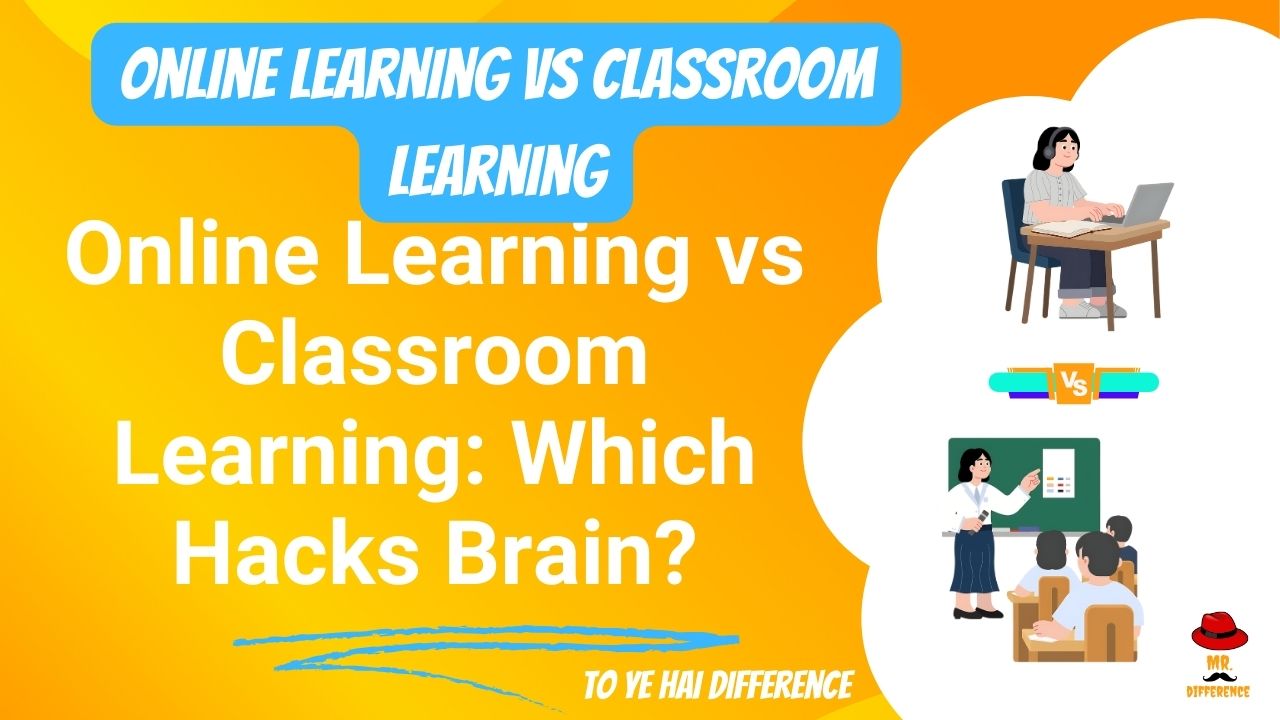
The way humans learn has changed more in the last decade than in the previous hundred years. Screens have replaced blackboards, headphones have replaced lecture halls, and flexibility has replaced fixed schedules. Yet one critical question remains unanswered for most learners.
Which learning method actually tricks the brain into learning better: online learning or classroom learning? The answer lies not in opinions, but in neuroscience, psychology, and how the brain responds to environment, attention, and emotion.
This article breaks down both models through the lens of brain science, helping you understand not just what works, but why it works, and for whom it works best.
Introduction to Online Learning vs Classroom Learning
Online learning vs classroom learning is no longer just an education debate. It has become a cognitive experiment happening at a global scale. Millions of brains are being trained under two radically different conditions.
The brain does not learn passively. It responds to stimulation, repetition, emotion, pressure, and reward. Understanding how each learning environment manipulates these factors is the key to choosing the right one.
How the Brain Actually Learns Information
1. Attention Is the Entry Gate of Learning
The brain learns nothing without attention. If attention drifts, information never reaches long-term memory. Dopamine plays a major role here, signaling what is worth focusing on.
Classroom learning uses external control to command attention. Online learning relies heavily on internal motivation. This difference changes everything.
2. Memory Formation Depends on Context and Emotion
The hippocampus stores memory more effectively when learning is tied to emotion, novelty, or social interaction. Emotion acts like a memory amplifier.
Learning environments that stimulate curiosity, urgency, or social presence strengthen recall. Flat environments weaken it.
How Online Learning Tricks the Brain
1. Control and Autonomy Trigger Dopamine
Online learning gives learners control over pace, time, and repetition. This sense of autonomy increases dopamine release, making learning feel rewarding rather than forced.
The brain interprets choice as safety and pleasure. This lowers stress and improves information retention.
2. Microlearning Matches Brain Processing Speed
Most online platforms use short videos, quizzes, and bite-sized lessons. The brain processes information best in chunks, not long lectures.
This structure reduces cognitive overload and keeps mental fatigue low, allowing longer learning sessions.
3. Personalization Creates Faster Neural Pathways
Adaptive learning systems adjust difficulty based on performance. The brain learns fastest when challenges are neither too easy nor too hard.
This personalized difficulty curve accelerates neural pathway formation and boosts confidence.
How Classroom Learning Tricks the Brain
1. Social Pressure Forces Focus
Being physically present with peers activates social monitoring systems in the brain. The fear of embarrassment or judgment increases alertness.
This pressure can sharpen focus, especially for learners who struggle with self-discipline.
2. Live Interaction Activates Emotional Memory
Tone of voice, facial expressions, and spontaneous discussions stimulate emotional centers of the brain. Emotional learning is remembered longer.
Classroom discussions often create memorable learning moments that digital content struggles to replicate.
3. Routine Builds Habit-Based Learning
Fixed schedules condition the brain through repetition. Over time, the brain enters learning mode automatically at specific times and locations.
This habit loop reduces decision fatigue and supports consistency.
Online Learning vs Classroom Learning for Focus
1. Digital Distractions vs Physical Constraints
Online learning competes with notifications, social media, and multitasking. The brain is easily tempted by novelty.
Classrooms limit distractions through physical design, forcing sustained attention for longer periods.
2. Deep Focus vs Passive Attention
Online learners who self-regulate can achieve deep focus states. However, many fall into passive consumption without engagement.
Classroom settings often encourage note-taking and real-time participation, increasing active attention.
Online Learning vs Classroom Learning for Memory Retention
1. Repetition and Replay Advantage
Online learning allows unlimited replay. Repetition strengthens synaptic connections and improves long-term retention.
Classroom learning relies on memory recall without repetition, which can weaken retention for complex topics.
2. Contextual Memory Anchors
Physical classrooms create strong contextual memory cues. The brain links information to location, sound, and social environment.
Online learning lacks stable context, which can reduce recall unless compensated with active learning strategies.
Which Learning Style Fits Different Brain Types
1. Self-Driven Learners
Highly motivated individuals with strong executive control thrive in online learning. Their brains enjoy autonomy and self-paced mastery.
2. Social and Emotional Learners
Learners who depend on interaction, feedback, and structure benefit more from classroom learning.
3. Neurodivergent and Anxious Learners
Online learning often reduces anxiety triggers like social pressure. This allows clearer thinking and better memory formation.
The Hidden Psychological Costs of Both Models
1. Online Learning Burnout
Excessive screen exposure fatigues the prefrontal cortex. Without boundaries, learning blends into rest, reducing recovery time.
2. Classroom Learning Anxiety
Fear of judgment and comparison activates stress hormones. Chronic stress impairs memory and reduces learning efficiency.
Neither model is perfect. The brain always pays a price.
The Hybrid Learning Model: The Brain’s Sweet Spot
1. Combining Autonomy with Social Engagement
Hybrid models offer flexibility while preserving human interaction. This balance maximizes dopamine, focus, and emotional memory.
2. Neuroscience-Backed Learning Design
Blended systems use online content for knowledge and classrooms for discussion, problem-solving, and emotional reinforcement.
This approach aligns with how the brain naturally learns best.
FAQ
Is online learning better for memory retention than classroom learning?
Online learning can improve memory retention when it includes repetition, active recall, and engagement. However, without discipline and structure, retention may drop due to distractions and passive consumption.
Why do some people fail at online learning?
Many learners struggle with self-regulation. Without external structure, the brain seeks easy dopamine from entertainment rather than effortful learning.
Does classroom learning improve intelligence?
Classroom learning does not increase intelligence directly. It improves discipline, social cognition, and communication skills, which support intellectual growth.
Can online learning replace classroom learning completely?
For skill-based and theoretical subjects, online learning can be highly effective. For emotional, social, and collaborative skills, physical classrooms remain superior.
Which learning method is best for long-term success?
Long-term success depends on combining both methods. The brain benefits from flexibility, repetition, social interaction, and emotional engagement.
Conclusion: Which One Really Tricks the Brain?
Online learning vs classroom learning is not a battle of technology versus tradition. It is a battle of brain chemistry, attention, and emotional engagement.
Online learning tricks the brain through autonomy, personalization, and dopamine-driven motivation. Classroom learning tricks the brain through social pressure, emotional cues, and structured habits.
The smartest choice is not picking one, but designing your learning environment to exploit both. When learning aligns with how the brain works, effort feels lighter, memory lasts longer, and growth becomes inevitable.

Write a comment