
Choosing the right job platform can completely change your career trajectory. With hundreds of job boards available today, two names dominate the global hiring ecosystem: LinkedIn and Indeed. Both are powerful, yet they serve different purposes, audiences, and career stages.
This in-depth comparison of LinkedIn vs Indeed breaks down features, job quality, networking potential, recruiter reach, costs, and real-world use cases. By the end, you’ll know exactly which platform fits your career or hiring goals best.
Introduction to LinkedIn vs Indeed
LinkedIn vs Indeed is not a matter of which platform is better overall, but which one is better for you. LinkedIn focuses on professional networking and personal branding, while Indeed is designed for fast, high-volume job discovery.
Understanding how these platforms differ helps job seekers avoid wasted applications and enables employers to spend hiring budgets wisely. Let’s explore both platforms in detail before comparing them side by side.
What Is LinkedIn and How It Works
1. Professional Networking Platform
LinkedIn is fundamentally a professional social network. Users create detailed profiles that function as digital resumes, showcasing skills, experience, certifications, and career milestones.
Connections, recommendations, endorsements, and content activity all contribute to visibility. Recruiters often search LinkedIn proactively, meaning jobs can find you even if you are not actively applying.
2. Job Search and Career Branding
LinkedIn Jobs integrates seamlessly with user profiles. Applicants can apply using their LinkedIn profile, track applications, and communicate directly with recruiters.
Personal branding plays a major role. Regular posting, commenting, and sharing industry insights increase profile reach and recruiter interest, especially for white-collar and leadership roles.
What Is Indeed and How It Works
1. Job Aggregation Platform
Indeed is a job search engine rather than a social network. It aggregates job listings from company career pages, recruitment agencies, and job boards into one searchable database.
Users can upload resumes, set job alerts, and apply directly through the platform or external employer sites.
2. Simple and Fast Hiring Tool
Indeed prioritizes speed and simplicity. Job seekers can apply to multiple roles within minutes, often without extensive profile optimization.
Employers benefit from massive applicant pools, making Indeed ideal for roles that require quick hiring at scale.
LinkedIn vs Indeed: Key Feature Comparison
1. Job Types and Industries
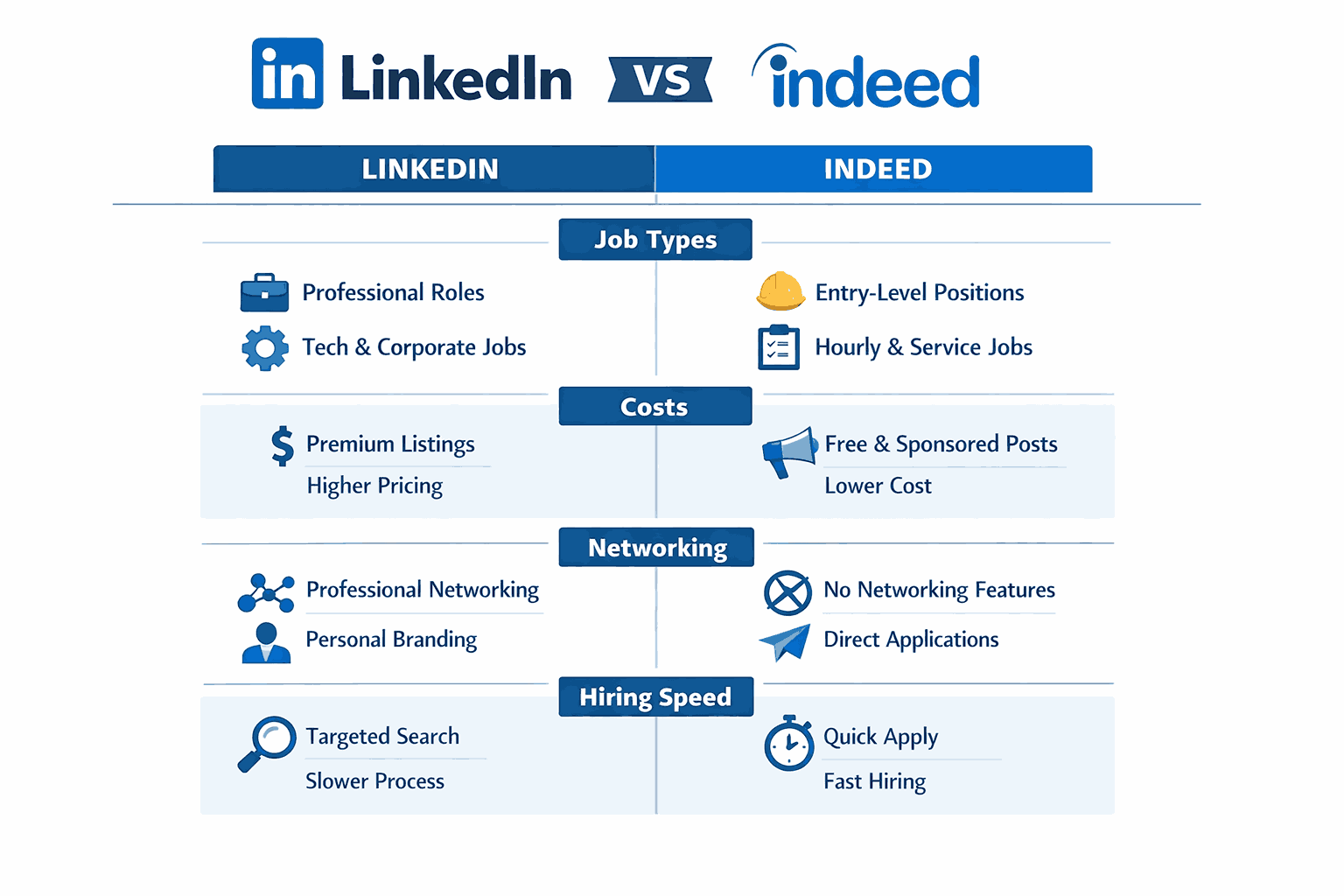
LinkedIn excels in professional, corporate, tech, finance, marketing, consulting, and executive roles. It is particularly strong for mid-to-senior level positions.
Indeed dominates in entry-level, hourly, operational, healthcare, retail, logistics, and manufacturing roles. It also performs well for local and regional hiring.
2. User Experience and Interface
LinkedIn’s interface is feature-rich but can feel overwhelming for new users. It blends jobs, content, messaging, and networking into one ecosystem.
Indeed offers a clean, search-first experience. Filters are intuitive, and job discovery is fast with minimal distractions.
LinkedIn vs Indeed for Job Seekers
1. Application Process
LinkedIn applications often require optimized profiles and tailored resumes. Some roles involve direct recruiter communication, increasing chances of interview calls.
Indeed allows one-click applications using uploaded resumes. While faster, competition is higher and personalized engagement is lower.
2. Visibility and Recruiter Reach
LinkedIn enables passive job searching. Recruiters frequently reach out directly based on profile keywords, experience, and activity.
Indeed relies on active applications. Recruiter outreach is less common unless resumes match highly specific criteria.
LinkedIn vs Indeed for Employers and Recruiters
1. Hiring Reach and Talent Quality
LinkedIn offers access to high-quality, career-focused professionals. Advanced search filters allow precise targeting based on skills, experience, and location.
Indeed provides massive reach and volume. Employers receive more applications but often need to screen heavily to find qualified candidates.
2. Employer Branding Opportunities
LinkedIn allows companies to build employer brands through company pages, thought leadership posts, and employee advocacy.
Indeed focuses more on job postings and employer reviews, with limited branding and storytelling capabilities.
Cost Comparison: LinkedIn vs Indeed
1. Pricing for Employers
LinkedIn job postings and recruiter tools are premium priced. Costs are higher but often justified for senior or niche roles.
Indeed offers both free and sponsored job postings. Sponsored listings operate on a pay-per-click model, making costs flexible and scalable.
2. Value for Money
LinkedIn delivers higher candidate quality and better long-term hiring ROI for specialized roles.
Indeed provides faster results at lower costs for high-volume or urgent hiring needs.
Pros and Cons of LinkedIn vs Indeed
1. LinkedIn Pros and Cons
Pros:
- Strong professional networking
- High-quality candidates
- Personal branding benefits
- Direct recruiter access
Cons:
- Higher hiring costs
- Competitive visibility
- Requires profile optimization
2. Indeed Pros and Cons
Pros:
- Massive job inventory
- Easy application process
- Lower cost for employers
- Ideal for quick hiring
Cons:
- High competition
- Lower personalization
- Limited networking features
Which Platform Is Best for Different Career Goals
1. Freshers and Entry-Level Candidates
Indeed is generally better for fresh graduates and first-time job seekers due to sheer volume and simpler applications.
2. Experienced Professionals and Executives
LinkedIn is superior for experienced professionals, managers, consultants, and executives seeking strategic career moves.
Best Strategy: Using LinkedIn and Indeed Together
1. Dual-Platform Job Search
Smart job seekers use Indeed to discover opportunities quickly while leveraging LinkedIn for networking and recruiter engagement.
2. Employer Hiring Strategy
Companies often post on Indeed for volume hiring and use LinkedIn for leadership or skill-critical positions.
Using both platforms together maximizes reach, quality, and hiring speed.
FAQ
Is LinkedIn better than Indeed for job search?
LinkedIn is better for professional, senior, and networking-driven roles, while Indeed is better for fast, high-volume job applications. The best choice depends on your career stage and industry.
Can I get a job using Indeed only?
Yes, many people get jobs using Indeed alone, especially in entry-level, operational, healthcare, and retail roles. However, combining it with LinkedIn improves long-term career growth.
Do recruiters prefer LinkedIn or Indeed?
Recruiters prefer LinkedIn for specialized and senior roles and Indeed for bulk or urgent hiring. Most recruiters use both platforms strategically.
Is LinkedIn worth paying for premium?
LinkedIn Premium can be worth it for active job seekers in competitive industries, as it offers insights, InMail credits, and better visibility.
Which platform is better for remote jobs?
Both platforms offer remote jobs, but Indeed has a larger volume, while LinkedIn often features higher-quality remote professional roles.
Conclusion: LinkedIn vs Indeed
LinkedIn vs Indeed is not a competition with a single winner. LinkedIn dominates professional networking, personal branding, and high-value career growth. Indeed excels in speed, accessibility, and job volume.
For the best results in 2026, use Indeed to find opportunities and LinkedIn to build relationships and get hired faster. When combined strategically, these platforms become a powerful career acceleration toolkit.
Write a comment